

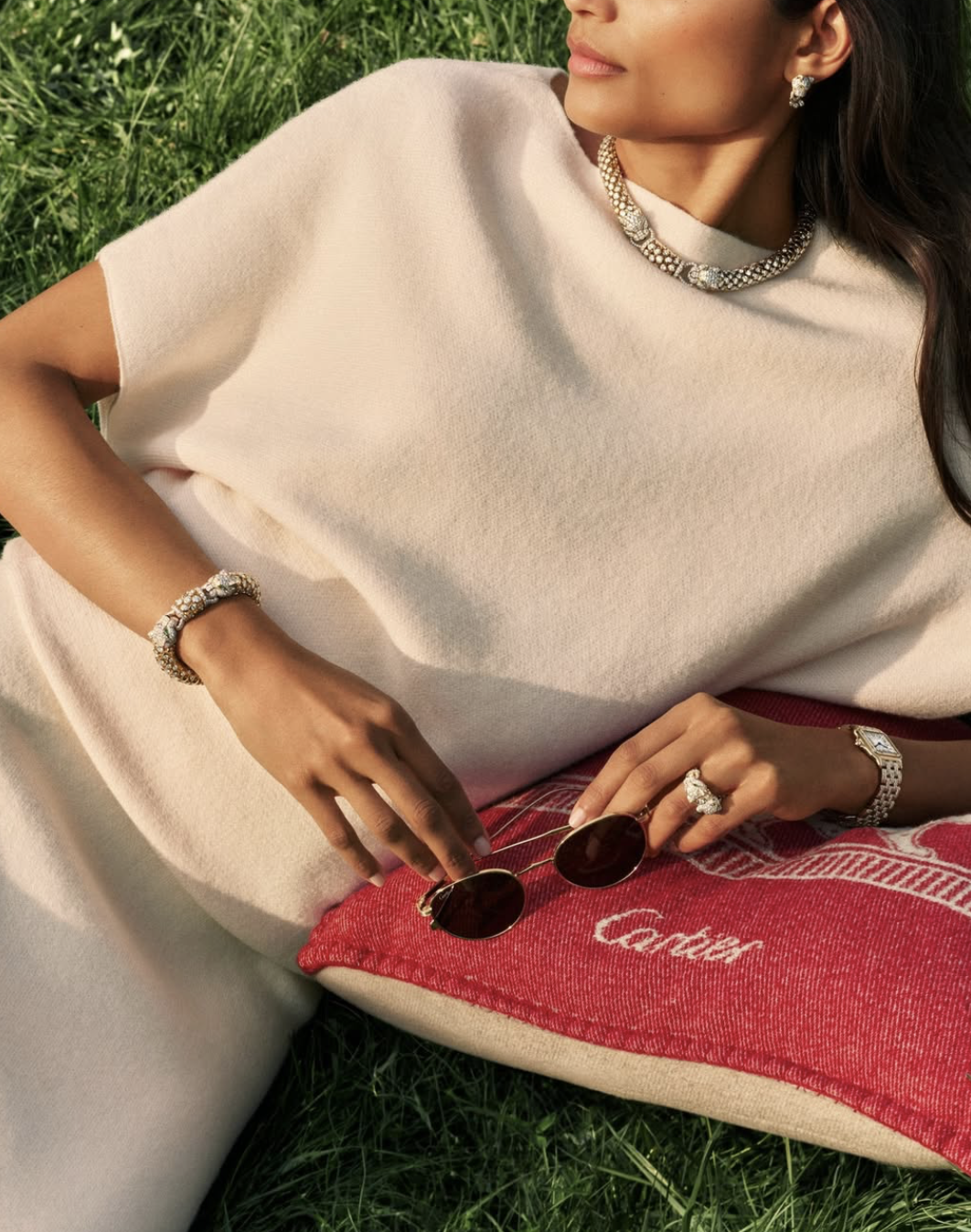

Some jewels announce themselves. Cartier’s tend to be known by their shape alone. Strong geometry, pure lines and a confident use of colour have given the Maison a style that needs no logo to explain it, and one that has moved easily between generations.
Behind that confidence is a deep respect for the making. Metal is shaped, stones are set and surfaces are finished with a care that goes well beyond what the eye first catches. The result is the quiet luxury of something made properly, and made to be worn.
That style was shaped by one family. Founded in Paris in 1847, the house has been at 13 rue de la Paix since 1899, and it was the founder’s three grandsons who took it international. Louis ran Paris and championed platinum. Jacques ran London, and his journeys to India from 1911 brought carved gemstones and bold colour into the Maison’s work. Pierre established New York, where Cartier still occupies the Fifth Avenue mansion he acquired in 1917 in exchange for a natural pearl necklace.
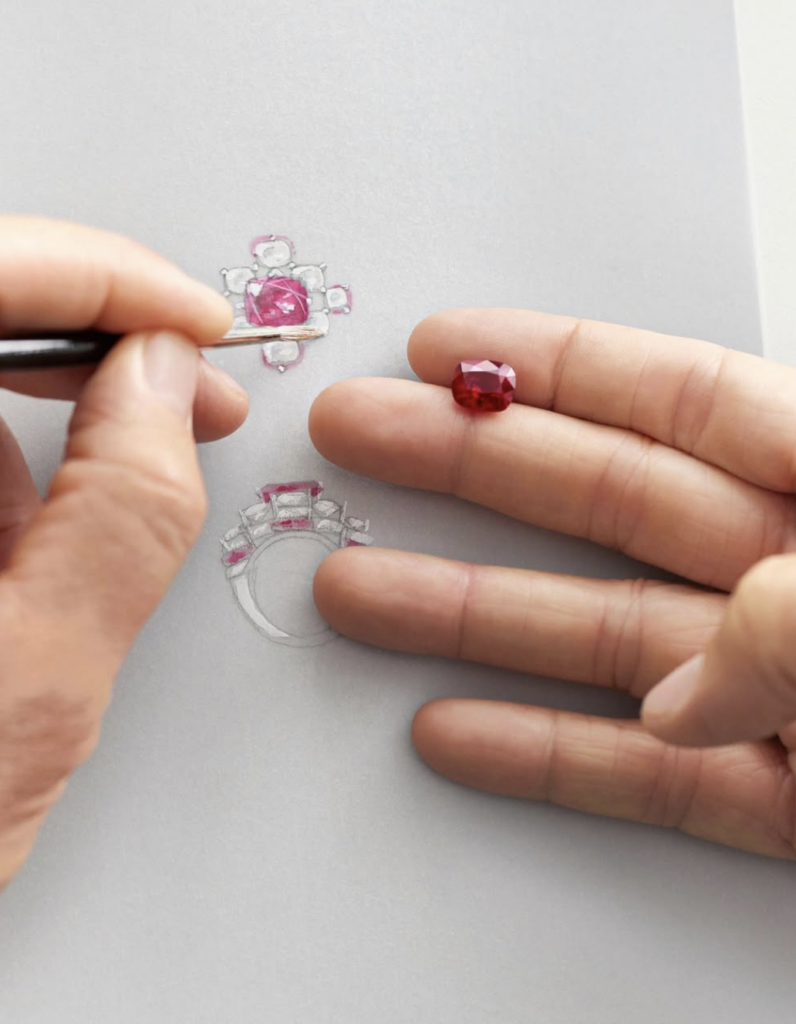
That spirit lives on today in the Maison’s enduring codes: essential lines, bold geometry, a love of colour and an eye that travels the world for inspiration. Its greatest designs were born not from trends, but from moments of invention, and it shows in the pieces that have defined it ever since.
The icons
Cartier’s icons are recognizable at a glance and they create true desire.
Trinity. Created in 1924, the ring is made of three intertwined, moving bands, originally in platinum, yellow gold and rose gold and now known in yellow, rose and white gold.
Panthère. The panther first appeared at Cartier in 1914, as onyx spots against diamonds on a wristwatch. Jeanne Toussaint, creative director from 1933, brought it into full form with a 1948 brooch for the Duchess of Windsor, in gold and black enamel around a 116.74-carat emerald.
Love. Created in New York in 1969 by Aldo Cipullo, it is an oval bracelet of two rigid arcs in 18-karat gold, with its screws left on show. The original closure locks with two functional screws and a screwdriver, and takes a second person to put on or take off.




To wear Cartier is to wear a piece of this story, a heritage that never feels like the past. It’s what makes the Maison’s icons feel as modern now as the day they were first drawn.
Shop the select Cartier pieces available at therealluxury.com
Image ref.: Cartier